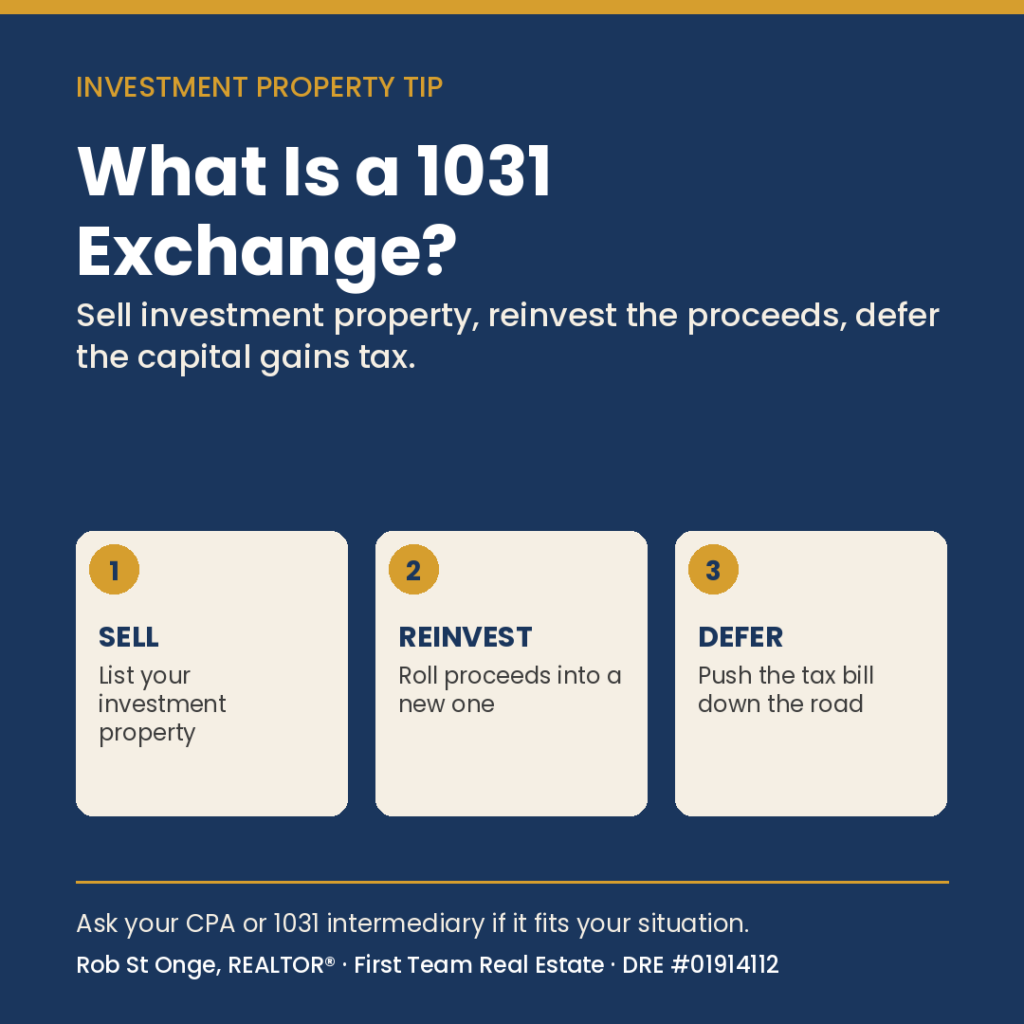
If you own investment property in the High Desert or Inland Empire and you’re thinking about selling, a 1031 exchange is worth understanding before you list. Named for Section 1031 of the Internal Revenue Code, it lets an investor sell one investment or business property and reinvest the proceeds into another ‘like-kind’ property while deferring the capital gains tax that would otherwise be due on the sale.
How it works, in simple terms
The basic sequence is: sell, reinvest, defer. You sell your current investment property, and instead of receiving the proceeds directly, they go to a qualified intermediary — a neutral third party required by the IRS to hold the funds. You then use those funds to purchase a replacement property that qualifies as ‘like-kind,’ which for real estate is a broad category that generally covers most investment or business-use property.
The deadlines are strict
Two timelines matter most. From the date your original property closes, you have 45 days to formally identify potential replacement properties, and 180 days total to close on the purchase. There’s little flexibility built into either deadline, which is part of why the qualified intermediary and your tax professional need to be involved before your sale even closes — not after.
Who typically uses one
Investors selling rental homes, small multifamily properties, land, or commercial buildings use 1031 exchanges most often, especially when they want to move equity into a different property type, a different market, or a property that better fits their goals — without a tax bill interrupting that move.
Where to start
A 1031 exchange isn’t something to attempt without guidance — it involves real estate, tax law, and strict timing all at once. The right first step is a conversation with your CPA or tax advisor about whether an exchange fits your situation, alongside a qualified intermediary who can structure it correctly.
If you’re weighing a sale of investment property in the High Desert or Inland Empire and want to talk through your options, I’m happy to help you think it through. Learn more about 1031 exchanges and get in touch here.
This article is for general informational purposes only and is not tax or legal advice. Consult a qualified tax professional or attorney about your specific situation.
